
UK gender pay gap 2025
Statement from our CEO
“As a company built on breakthrough innovation, Cambridge Consultants thrives when our teams are diverse, empowered and able to contribute their best. A diverse workforce doesn’t just strengthen our culture, it drives better innovation, stronger client outcomes and superior business results.
Our 2025 gender pay gap report reflects both the progress we have made and the work that remains. Like many organisations in the deep‑tech and consulting sectors, our gender pay gap is strongly influenced by representation patterns across senior technical and commercial roles. But it is our responsibility to address these structural barriers. This means continuing to attract, retain and develop exceptional women at every stage of their careers and ensuring that Cambridge Consultants is a place where they can excel and lead.
As CEO, I am committed to accelerating this progress. For 2026, we have set clear priorities. We will strengthen our governance so progress is owned at the highest levels. We will build a more intentional engine to retain, develop and progress diverse talent across the organisation. We will improve how we capture and use data to inform future strategic initiatives and ensure full legislative compliance. And we will continue to invest in and better support our established and growing employee networks, recognising the vital role they play in building an inclusive community.
This report reflects where we stand today; our priorities reflect where we intend to go. We are committed to creating an environment where innovation flourishes because opportunity is genuinely equitable and where every colleague can help shape the breakthroughs that define our future.”
Richard Traherne, CEO
Overview
- This year’s results show both progress and areas where structural imbalances remain. We continue to focus on long-term actions that support gender balance across all levels.
- We are fundamentally a people-based business. We recognise the significant benefits that derive from a more inclusive and diverse organisation. From entry-level roles to senior leadership, we remain committed to driving gender equality across our global business.
- Gender equality is just one element of our commitment to create a truly inclusive workplace where all employees can thrive.
- Whilst this report only reviews the status of our UK employees our focus on developing a culture underpinned by inclusive policy and practice has global reach.
What is the UK Gender Pay Gap?
- Since April 2017, the UK Government has required all UK companies with a headcount of 250 or more to annually publish figures on their UK gender pay gap to encourage greater focus and prioritisation on closing the gap.
- UK gender pay gap reporting calculates the difference between the hourly pay of men and the hourly pay of women in our UK business. Hourly pay includes base pay, allowances and any bonus and other incentive pay.
- Figures represent the difference between men’s and women’s hourly earnings as a percentage of men’s hourly earnings
- The gender bonus gap is the difference in the bonus pay received by men and women.
- Looking at the UK data supplied by the government the gender pay gap has been declining slowly over time.
- For reference, the ONS reported that the gender pay gap for median gross hourly earnings among all employees in the UK reduced to 12.8% in April 2025, down from 13.1% in April 2024.
- Tracking the evolution of the gap across multiple years is key to assessing progress.
- We have calculated our gender pay gaps using the methodology as required by the regulations for publishing UK gender pay gap information.
- Our 2025 calculations take into account voluntary salary sacrifice pension, childcare vouchers and Cyclescheme contributions.
- The data in this presentation is based on a snapshot date of the 5th of April of each year to match the reporting period required by the Government.
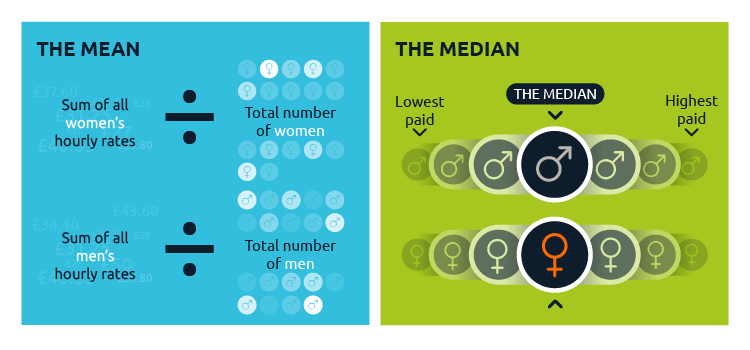
MEAN GENDER PAY GAP
The mean gender pay gap is the difference in the average hourly pay for women compared to men, within a company.
MEDIAN GENDER PAY GAP
The median represents the middle point of a population by taking all salaries in the sample and lining them up in order from lowest to highest to identify the middle salary. The median pay gap is the difference between the hourly pay rate for the middle woman compared to the middle man.
Does having a pay gap mean women are not paid the same as men?
It is important to note that a gender pay gap is not the same as equal pay. Equal pay is the concept of paying men and women equally for equivalent work. The gender pay gap report does not report on equal pay as it does not compare pay between men and women for specific roles. We monitor equal pay and are committed to pay equally and fairly across job roles and reward our people based on their performance and contribution.
Understanding our UK Gender Hourly Pay and Bonus Gap
Our 2025 gender pay gap results reflect the structure of our workforce and the distribution of men and women across different levels of seniority. While our mean and median hourly pay gaps have increased slightly this year, the underlying drivers remain consistent with previous reporting periods: a higher proportion of men occupy senior technical and leadership roles, while women are more represented in early career and mid-level positions.
Hourly pay gap
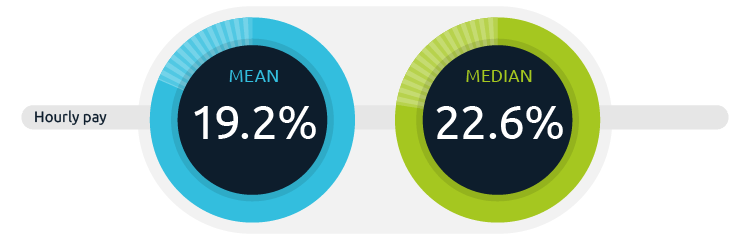
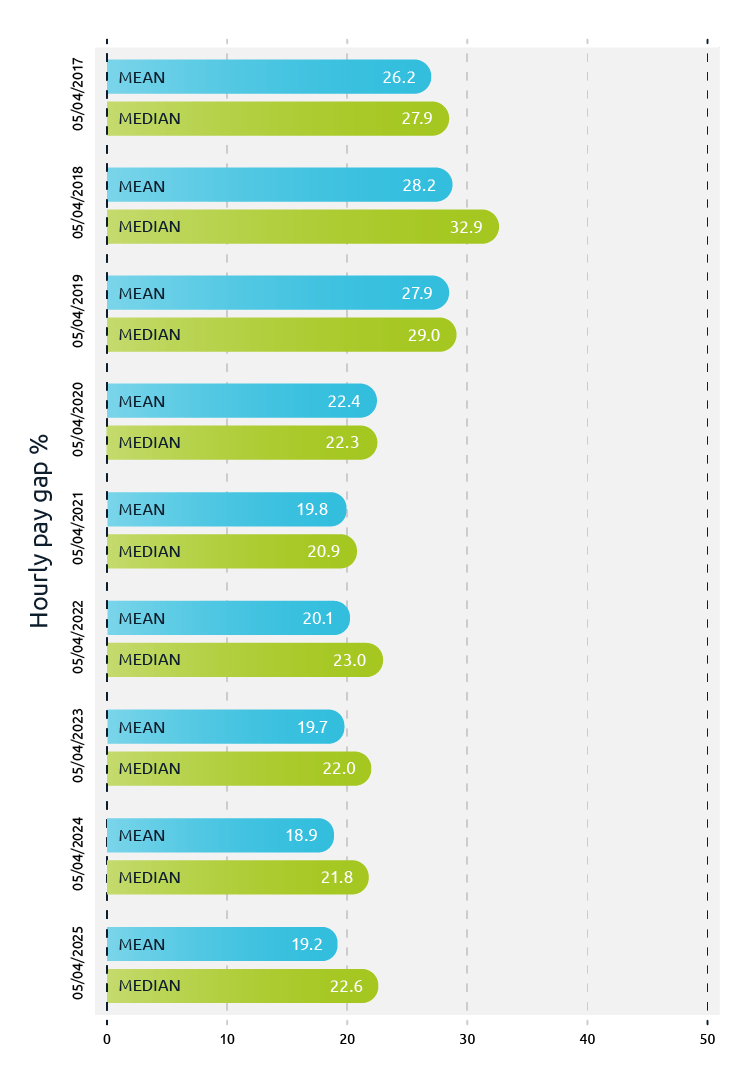
For the reporting year ending 5 April 2025, our mean hourly pay gap is 19.2% and our median hourly pay gap is 22.6%. Both figures represent a small increase compared with 2024. This movement is largely explained by the difference in seniority in roles held by the individuals at the median point. These roles carry different levels of responsibility and remuneration, and this structural difference influences the median pay gap.
Of our new starters, 63% were men and 37% were women. At the junior level and below, 72% of new starters were men, which increases the proportion of men in the lower and lower-mid quartiles. At more senior levels, hiring was balanced. This is a positive indicator for future representation in the upper quartiles, but the impact on the pay gap will take time to materialise.
Bonus pay gap
We run an identical bonus scheme for men and women which includes a qualifying period from date of joining before bonus payments are made. Our annual performance bonuses make up the vast majority of the monetary value calculated under ‘bonus’ for the purpose of this report. Annual bonuses are calculated as a percentage of base salary and bonus target percentages increase stepwise with seniority. Because bonus targets increase with seniority, differences in role level have a compounding impact on the bonus gap. Lower salary × lower bonus % creates a much smaller bonus, while higher salary × higher bonus % magnifies the gap. As the median man and median women currently sit in roles with different bonus targets, the resulting bonus gap is amplified, as bonus achievable is a greater proportion of the higher pay. This means differences in role distribution can significantly widen bonus outcomes, even where bonus policies are applied consistently. Our analysis confirms that men and women in equivalent roles have identical bonus opportunities.
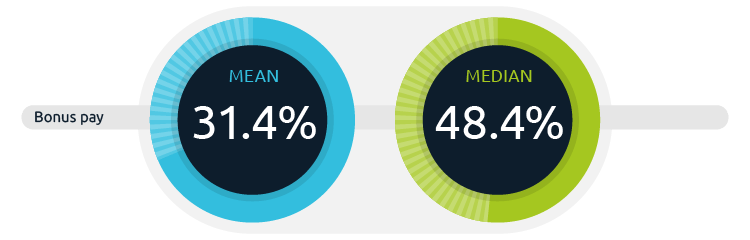
Against this backdrop this year our mean bonus gap has decreased from 33.9% in 2024 to 31.4% in 2025. However, our median bonus gap has increased to 48.4% consistent with the roles at the median bonus point diverging further in seniority compared with last year, ie the median man and the median woman are this year in roles with a larger difference in bonus targets. Despite this widening difference in role seniority, the overall mean bonus gap has narrowed, reflecting a more even distribution of bonus values across the organisation, while the middle widened meaning the median gap was larger.
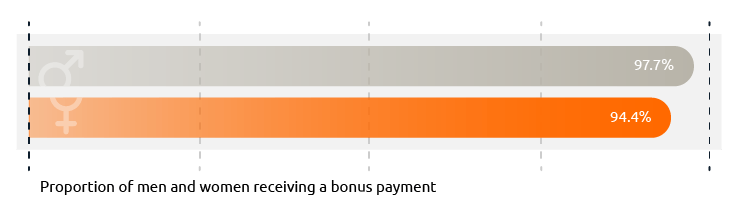
Bonus eligibility remains high and broadly consistent across genders, with 97.7% of men and 94.4% of women receiving a bonus during the reporting period. This demonstrates that access to bonuses is equitable, and the gap is driven by differences in seniority and role type rather than participation. Our hypothesis is, given within-role parity and % of women receiving a bonus actually falling vs 2024, that the mean gap narrowing is largely down to better top end balance across the larger % bonus targets. The median gap still widened because men and women are concentrated at different role levels where bonus targets scale with seniority.
Workforce distribution – Pay Quartiles
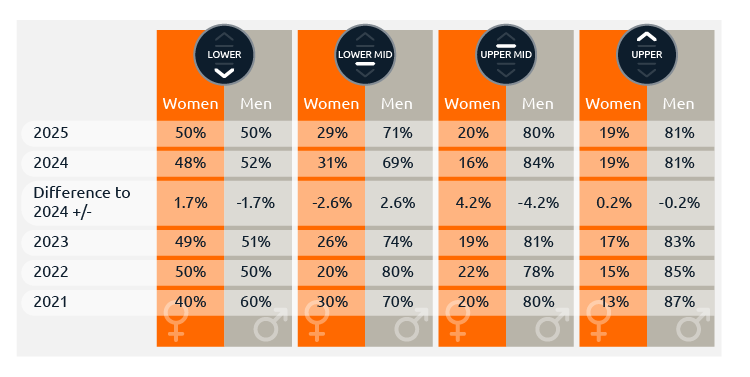
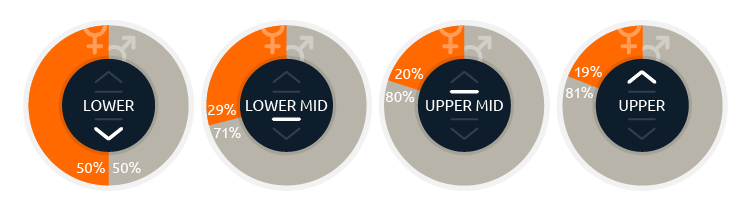
Over the past five years, our quartile data shows gradual improvement at both the entry and senior levels, alongside persistent challenges in the middle of the organisation. Women’s representation in the lower quartile has increased from 40% in 2021 to a stable ~50% since 2022, indicating that efforts to attract and retain women into early career roles are having a sustained impact. At the opposite end of the organisation, the proportion of women in the upper quartile has grown from 13% in 2021 to 18.7% in 2025. While progress remains gradual, the upward trend is nonetheless encouraging.
In contrast, the middle quartiles show limited movement. The lower mid quartile has fluctuated around ~30%, while the upper mid quartile has averaged ~19% across the period. Despite expected “ripple effects” from gains at entry level and incremental progress at senior levels, we have not yet seen the degree of improvement required in these middle layers. This pattern suggests that mid career progression barriers may still be constraining women’s advancement.
Taken together, the data shows a strengthening gender balance at the point of entry and some progress at senior levels, but continued underrepresentation through the middle and into the upper quartile. This steady drop-off indicates that while women are entering the organisation in greater numbers, progression and/or retention into higher paid, higher bonus roles is lagging. This pattern highlights the need to focus on progression pathways, mid‑career development and retention strategies that support women through the critical transition from junior to mid‑senior roles.
Summary
Our pay gap is primarily caused by two main factors;
- There are more men than women at every career grade in our UK workforce, including senior technical and leadership roles, which has the greatest influence on the pay gap. In the 2025 data period 69% of our workforce were men and 31% were women. Around 67% of all women in the organisation were in the lower two quartiles.
- Women are more represented in administrative support roles, which typically fall into the lower pay quartiles.
As noted above, our reported gap is significantly impacted by the ratio of men to women across the organisation, particularly those at senior leadership level. Within wider diversity aims we are working to increase gender diversity in new hires and to support progression.
We recognise that we are operating in a challenging environment for women in engineering and technology where women remain significantly under-represented. According to a 2025 report analysing 2024 Labour Force Survey data, women made up 16.9% of engineering and technology occupations, whilst making up over half (56%) of all other occupations combined. Source: https://www.engineeringuk.com/research-and-insights/our-research-and-evaluation-reports/engineering-and-technology-workforce-may-2025-update/
Undertaking additional analysis, we are proud to continue to have gender equity in our promotion rates as a proportion of our overall workforce in 2025.
However, progression into senior roles continues to be a key driver of our gender representation and, in turn, our gender pay gap. During the year to 5 April 2025, women accounted for 39% of promotions at the Director, Associate Director, Group Leader and Function Manager levels, with men representing 61%. While this reflects positive movement in strengthening the pipeline of women into senior positions, we recognise that there is still more to do to achieve a more balanced distribution at these grades.
We are continuing to focus on actions that support fair and transparent progression, including strengthening our talent review processes, improving access to development opportunities, and ensuring that promotion decisions are consistently aligned with our inclusion and diversity commitments. These steps are designed to help us build a stronger, more gender‑balanced leadership population over time.
Overall, our 2025 gender pay gap results continue to reflect the distribution of men and women across different levels of seniority within our organisation. While the hourly pay gap has increased slightly, the mean bonus gap has reduced, and we have seen encouraging signs in senior hiring and representation at both ends of the organisation. We remain committed to improving gender balance at all levels. We will continue to track indicators and be taking an evidenced based approach to supporting career progression, and creating a more representative leadership pipeline over time.
What is Cambridge Consultants doing to address the gap?
Actions that we take should be specific, evidence-based and allow connection to impact. For us addressing this is a strategic issue and is embedded in our company direction. As we prepare for the required action plan in next year’s reporting we are already seeking data-led explanations for our gap and to focus our efforts to close the gender pay gap.
Inclusive Futures @ CC
Innovation happens when different perspectives come together. Diversity of thought has always been central to who we are at Cambridge Consultants. In 2026, we are evolving our approach to supporting diversity, inclusion and belonging through Inclusive Futures. Our refreshed Inclusive Futures strategy will help us to build a workplace where everyone can thrive.
Strengthening our foundations
Building on years of grassroots activity and strong leadership support, we have introduced a new Inclusive Futures governance model to help us raise our game. This includes a strengthened Steering Committee – bringing together our employee network leads, APAC and NA representatives, and members of the leadership team – to ensure open feedback, shared accountability, and coordinated action across the organisation. This model spans SteerCo, employee networks, specialist teams and the wider business, embedding inclusion into how we operate day-to-day.
Listening to our people and understanding barriers
We know that meaningful progress requires evidence. That’s why we are investing in improved data capture and deeper insight into the employee experience. This year, our focus is on expanding demographic data collection beyond sex and analysing the full employee lifecycle to illuminate where barriers exist and how they affect different groups. This evidence led approach will help us focus our efforts where they can have the greatest impact.
Empowering our employee networks
Our employee networks remain at the heart of our inclusive culture. These voluntary, employee led communities include:
- Race, Ethnicity & Culture
- Parent & Carer
- Wellbeing & Mental Health
- Women’s+
- LGBTQ+
- Neurodiversity
- Disability
- Social Mobility
Our networks provide peer support, drive organisational change, and help us build belonging across CC. Network leads sit within the Inclusive Futures Steering Committee, ensuring their insights shape strategic decisions and that they receive the sponsorship, learning and development support they need to thrive.
Our Women’s+ Network that was launched in 2021 has become established and aims to create an empowered community of women and allies working together to promote equity and inclusion in the workplace. Through our coordination with other Networks we will continue to explore cross-cutting topics around mental health, parental support, disability, ethnicity and LGBTQ+. Discussions have included gender bias in neurodiversity, period health, fitness and imposter phenomenon. Additionally, we have a Women’s Health Hub bringing together our cross-disciplinary thinking to research and consider ways in which we as a business can create more equity in health and wellbeing through our strategy consulting, product development and service design.
Supporting colleagues experiencing menopause is a key part of our commitment to building an inclusive workplace where everyone can thrive. Over the past years we have hosted Women’s+ Network discussion forums and brought in external medical experts and social influencer advocates for company-wide webinars. The topics have been wide ranging from male allyship to lifestyle medicine exploring ways in which those affected can be supported. We have launched our own menopause guidance document to provide clear, accessible support and we have formally signed the Menopause Workplace Pledge. We recognise that this is an ongoing journey and we remain committed to learning, improving and taking action to ensure our culture supports all colleagues at every stage of life.
Building an engine for diverse talent
A diverse workforce drives innovation, better client outcomes, and stronger business results. Through Inclusive Futures, we are designing a systematic framework to retain, develop and progress diverse talent. This includes leadership training on inclusive behaviours, and organisation-wide learning to interrupt bias, such as neurodiversity awareness in feedback. In parallel, we are delivering manager enablement to our global line manager population. These learning initiatives strengthen gender inclusion, developing practical skills that support inclusive day to day behaviours, and embed inclusive management practices within our people manager community.
Building on our previous success with focused leadership development, these actions aim to strengthen the female leadership pipeline and continue to address the underrepresentation of women in senior roles.
Strengthening Our Inclusive Recruitment
After more than a year of using our new applicant tracking system, we are better positioned to make more informed, data-driven decisions about our recruitment process. We continue to review our recruitment channels and expand access to more diverse talent pools. Our job advertisements use inclusive language to ensure they appeal equally to both men and women.
We have actively made changes to our interview process and revised what information we share with candidates and way this is presented, ensuring it is inclusive and accessible. Additionally, we remain mindful of the composition of our interview panels and strive to achieve greater gender equality in our interview line-ups whenever possible.
We are continuing to focus on broadening the diversity of our early careers talent pool across Scholarship, Apprenticeship, Internship and Graduate positions. By engaging with a wider range of academic institutions and university societies, we aim to drive greater representation, particularly among women in STEM fields. This year, we have partnered with three Women in STEM societies, delivering panel events and targeted engagement to increase visibility of our opportunities, alongside attending key events to inspire and connect with early careers talent. We have prioritised strong female representation across these activities to provide visible role models and authentic insights into careers in STEM. In addition, female colleagues have engaged with grassroots and pre-university institutions, sharing their experiences to inspire students and encourage more young women to consider STEM career pathways.
Additionally, we have targeted Women in STEM events and are leveraging less gender-represented skill sets through video campaigns, including skill set interviews on platforms such as Gradcracker. To complement these efforts, we have developed inspiring multimedia content for multi-channel campaigns, ensuring that our recruitment processes, onboarding and engagement experiences are inclusive, positive and supportive of diverse talent.
To strengthen onboarding and promote a sense of belonging, we have facilitated connections between female new starters, encouraged community-building activities, and introduced buddy partnerships, pairing female new starters to foster peer support and a strong sense of community.
Inspiring the next generation
We recognise the importance of early interventions in widening participation and increasing diversity in STEM. Through our STEM Outreach programme, we work with partner organisations, community groups, and schools to provide financial support and volunteer time, ensuring young people, particularly those who may face additional barriers such as socio economic disadvantage, disabilities or learning differences, or caring responsibilities, have equitable access to STEM experiences.
We understand the difference made to children’s aspirations from seeing diverse role models in STEM. To address this we ensure our volunteer teams reflect a broad and inspiring range of backgrounds and experiences, enabling young people to see themselves represented and to envision a future in STEM.
Our outreach activities continue to inspire the next generation and support the development of future CC talent. Engagement from volunteers across the business remains high, with colleagues contributing their time and energy to create hands on, meaningful experiences for young people.
The key aims of our STEM Outreach programme are to:
- Support our local communities.
- Help address the gender imbalance in STEM.
- Provide opportunities for young people who might otherwise miss out due to factors such as socio economic disadvantage, disability or learning differences, or caring responsibilities.
Creating the conditions where people thrive
Our aim is to create gender parity in the workplace and encouraging more equity across all parents is one way we’re achieving this. We demonstrate a progressive approach to New Parent Leave and provide strong support, assisting new parents with building family relationships and balancing work and career opportunities. Our New Parent Leave Policy is gender neutral giving all new parents, whether by birth, as a result of adoption or by surrogacy arrangement, 13 weeks paid parental leave, regardless of gender or sexual orientation. Additionally we have recently put in place transparent and accessible guidelines around Neonatal Care Leave, Pregnancy/ Baby Loss Support and Transitioning at Work.
We continue to adopt and promote agile and flexible working practices to help all employees balance their personal commitments and we introduced the right to request flexible working from the day that someone joins our business. In the UK we continue to offer a benefits and facilities that help support inclusion and belonging. Our canteen provides free of charge breakfast and lunch and separate areas are set aside for quiet working, wellness or religious observance and for nursing or pumping. Our employees have access to an independent, free Confidential Care Employee Assistance Programme and a wellbeing platform to access self-help resources. Additionally, we have a Mental Health Peer Support group, UK based colleagues who provide a listening ear and friendly voice. We continue to learn from our people what we can do to remain an employer of choice through engagement surveys.
Across 2026, this work will evolve as our data matures, enabling us to expand our focus to a broader range of inclusion and representation challenges over time.
To accelerate the closing of the gender pay gap we have the following areas of focus. We will continue to drive evidence-based prioritisation of these initiatives.
Strengthening Mid‑Career Progression Pathways
Whilst we might be seeing a ripple effect across the middle quartiles, women remain consistently under‑represented in the upper-mid and upper quartiles. As more women progress into senior roles, the middle can temporarily appear to contract until subsequent cohorts advance. Our focus now is to sustain this pipeline by maintaining strong hiring and retention at earlier levels while ensuring timely, fair progression so the middle bands trend upward over the next cycle.
We plan to:
- Undertake further analysis on our promotion criteria and decision‑making processes to ensure fairness and clarity.
- Conduct talent reviews to identify and support high‑potential women earlier in their careers.
- Analyse attrition patterns at mid‑career levels to understand and address any barriers to progression.
Accelerating Representation in Senior Roles
Although women’s representation in the upper quartile has increased from 13% in 2021 to 18.7% in 2025, and our recruitment at senior levels is more gender balanced, progress remains slow and senior leadership continues to be male‑dominated.
We plan to:
- Review promotion processes to minimise bias, including the use of diverse panels and structured evaluation frameworks.
- Explore potential leadership readiness programmes that build the skills and visibility required for senior roles.
Sustaining Gender Balance at Entry Level
We have achieved strong gender balance in the lower quartile, with women representing 50% in 2025. Maintaining this progress is essential to building a long‑term talent pipeline.
We plan to:
- Continue to apply gender‑balanced recruitment practices, including inclusive job design and balanced interview panels.
- Monitor early‑career progression to ensure women advance at comparable rates to men.
Addressing Cultural and Structural Barriers
The overall quartile pattern reflects a tapered structure, with strong representation at entry level, a narrowing through the middle with limited representation at senior levels. This tapering pattern can be symptomatic of different underlying causes which we are eager to explore further and may include:
- systemic barriers affecting women’s progression
- role-type segregation where women may be over-represented in functions that are structurally lower-paid or more junior
- cumulative effects of working pattern differences
- legacy issues in senior leadership pipelines where exec and senior technical and commercial roles often reflect historic gender imbalances and continue to draw upon an outside candidate pool where men are over-represented
We plan to:
- Review role design, workload expectations, and flexible working arrangements to support retention and progression, particularly during mid‑career stages.
- Review our progression pathways and career expectations.