by Miles Upton and Yoichi Ishige | 15th September 2026 | Newsroom
Cambridge Consultants’ Yoichi Ishige and Miles Upton tell Space Wave Japan they see substantial growth in Japanese space projects across APAC, reflecting rising demand for “translational R&D.” Their insights spotlight a key question facing Japan’s ¥800 billion Space Strategy Fund: how the country will turn technical milestones into paying customers, lasting partnerships, and sustainable revenue.

by Niall Hunt | 14th September 2026 | Newsroom
Radical innovation is becoming a clear strategic necessity leaders to address toughening customer demands, geopolitical instability and shareholder desire for continued double-digit growth

by Niall Hunt | 14th September 2026 | Newsroom
New collaboration embeds world-class deep-tech expertise across the XPRIZE lifecycle to accelerate breakthrough technologies from competition to real-world impact.

by Miles Upton and Tim Ensor | 8th September 2026 | Newsroom
Cambridge Consultants envisions a heterogeneous compute future blending CPUs, GPUs, quantum, photonic, and biological systems. Cambridge Consultants’ Global Head of AI, Tim Ensor, and Regional General Manager for APAC, Miles Upton, discuss quantum readiness, post-quantum security, photonic chip development, AI-driven biological computing, and the orchestration challenges of managing workloads across these diverse compute paradigms for enterprises.
by Richard Traherne and Yoichi Ishige | 7th September 2026 | Newsroom
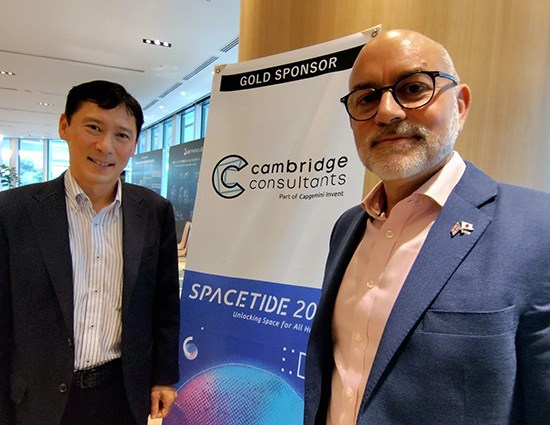
Space is shifting from an uncharted frontier to essential everyday infrastructure. In this Yomiuri Shimbun interview, Cambridge Consultants’ CEO, Richard Traherne, and Representative Director for Japan, Yoichi Ishige, urge Japan to move faster commercially, build on its strengths in safety-critical systems and sensing, and pursue global partnerships while balancing space sovereignty with international collaboration.
by mattjackson | 18th June 2026 | Consumer Products, Defence and Security, Medical Devices, Newsroom
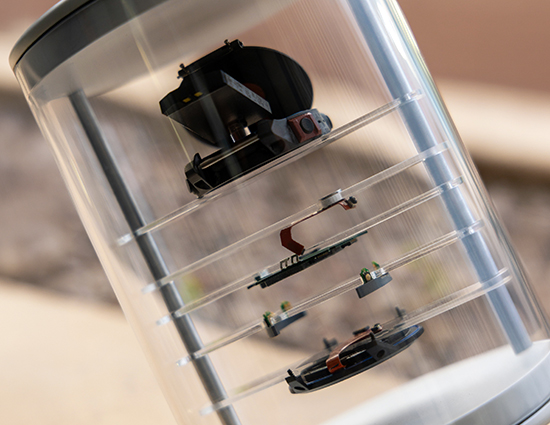
CC’s Matthew White makes the cover story for his article by CNET on repairable wearables. First showcased at CES in January, where it was shortlisted for a best in show award, Matt’s work in overcoming the right-to-repair in small electronics is a must-read.