
At CC, our approach to deep tech innovation starts with a simple question: how can advanced technology meaningfully improve people’s lives, and what real, human problem are we trying to solve?
It’s a principle that sits at the heart of our deep tech mindset, guiding the scientists, engineers, designers and strategists I’m fortunate to work with every day. Together, our aim is to transform technical expertise, user insights and market knowledge into products and experiences that have the potential to significantly improve lives and outcomes.
This philosophy of combining deep tech innovation with human-centred design has been recognised on the global stage with three prestigious iF Design Awards, including the coveted iF Gold Award – given to fewer than 1% of entries worldwide.
Each year, the Gold Awards highlight the very best examples of design innovation across industries. This year, CC’s design concept earned Gold alongside some of the world’s most influential technology companies, including Apple and Google.
For our design team, these awards are a wonderful moment of recognition. But more importantly, it reinforces the value of the user-centric design approach that sits at the heart of our deep tech mindset. For us, even the most sophisticated technology is only truly valuable when it connects with real human needs and experiences.
The three award-winning concepts reflect this approach in different ways, applying our human-centred deep tech mindset to challenges in healthcare, consumer experiences and music.
CC’s gold award winner rethinks the cervical screening experience
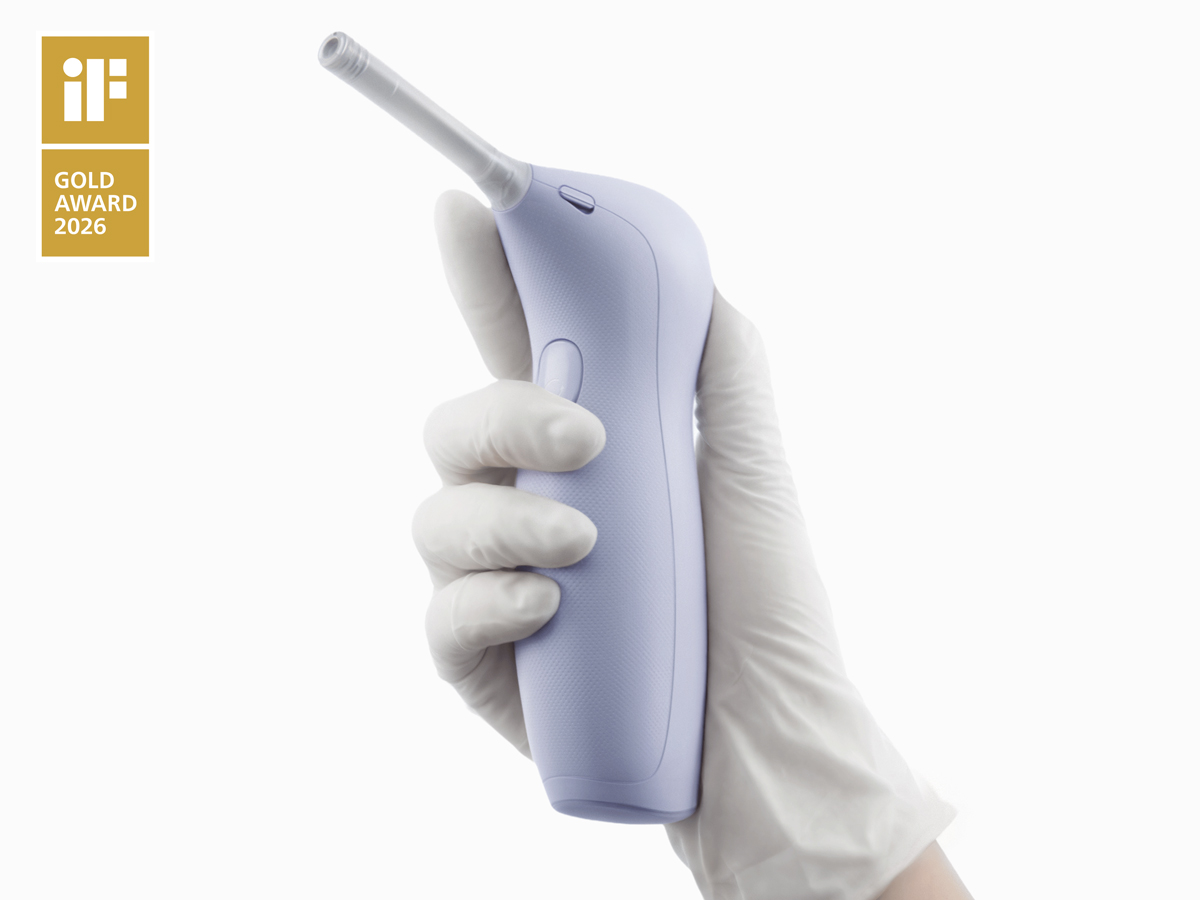
The iF Gold Award was awarded for our Forme cervical screening device, a concept created to transform the cervical screening experience.
Cervical screening is a critical preventative health measure. Yet many women delay or avoid appointments because the procedure is perceived as uncomfortable, invasive or embarrassing. We saw that improving the experience wasn’t simply a design challenge – it’s a healthcare challenge that can ultimately influence participation rates and health outcomes. That’s where user-centric design becomes so important: understanding the emotional as well as the clinical realities of a procedure and designing technology that responds to both.
With Forme, we reimagined the entire interaction from the user’s perspective. The concept replaces the traditional metal speculum with a soft, handheld device that visualises and collects cell samples with minimal invasion. Beneath the approachable exterior sits a sophisticated mechanism that articulates and extends to accommodate different anatomies while maintaining clinical visibility.
Just as importantly, the design reconsiders the human interaction during the procedure, putting the patient’s experience at the centre. An integrated camera allows clinicians to remain seated face-to-face with the patient rather than positioned awkwardly during the examination – helping to preserve the patient’s dignity and reduce anxiety. Small changes like this can make a real difference, helping patients feel more comfortable and in control during what can otherwise be a stressful experience.
Cervical screening tests can be both life-saving and uncomfortably invasive. This instrument applies empathy and consideration to a sensitive medical experience. The ergonomic handle helps clinicians, while the softer form language reduces patient anxiety. This is a long-overdue innovation executed with great care and intelligence.
The iF Gold Award jury recognised this combination of empathy and engineering, describing the device as a “long-overdue innovation executed with great care and intelligence”.
For us, it’s a powerful example of how user-centric design can transform even the most sensitive clinical procedures.
Making advanced technology feel effortless with airBrew
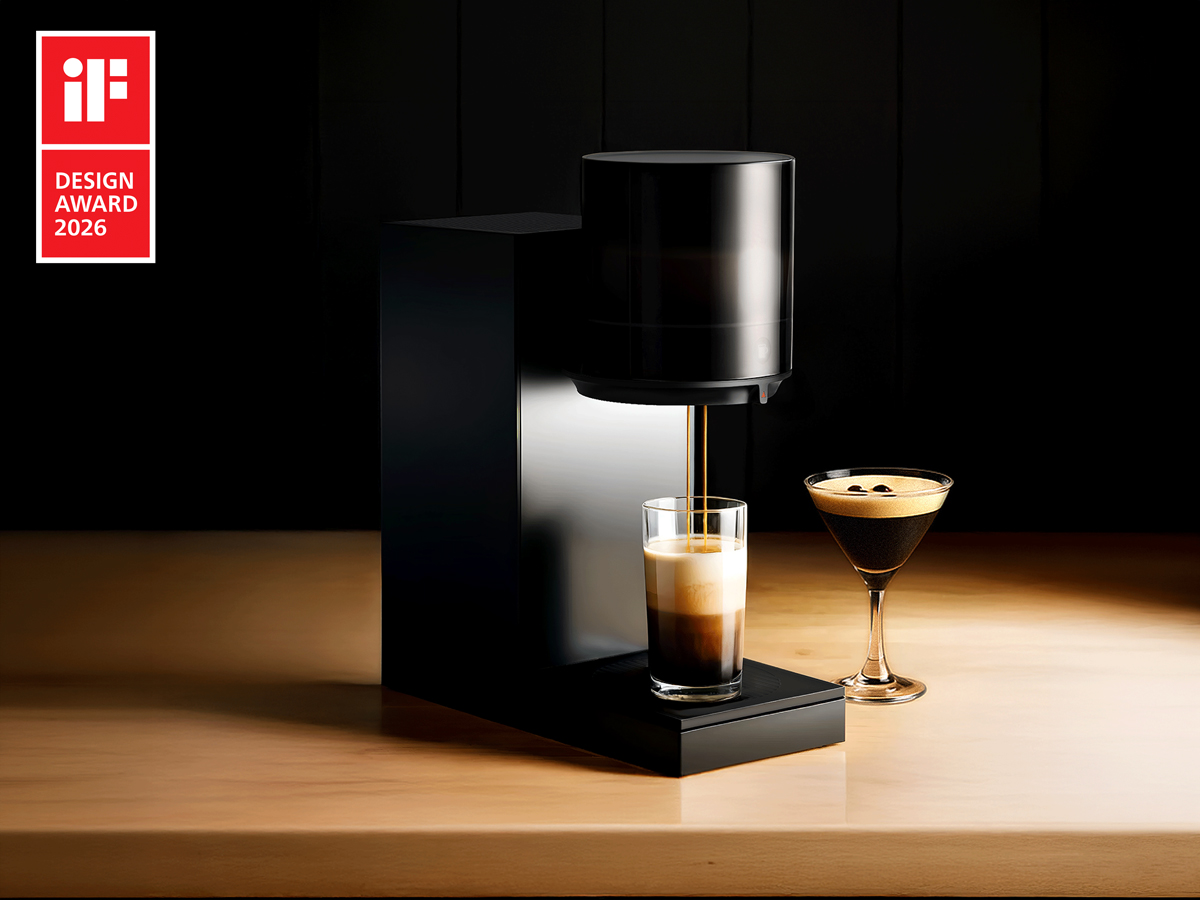
Our airBrew Nitro Drinks Infusion System, a concept designed to bring café-quality nitro beverages into the home, was also recognised with an award.
Nitro drinks are loved for their smooth texture and cascading foam, but traditionally require specialist equipment and disposable nitrogen canisters. airBrew reimagines this experience through a compact system that brews, infuses and dispenses beverages while generating nitrogen directly from air.
The airBrew hides a significant amount of engineering complexity behind a beautifully simple user experience. This balance is a hallmark of our human-centric design: transforming complex processes into effortless and enjoyable experiences.
Creating Tuuli, a new kind of musical instrument
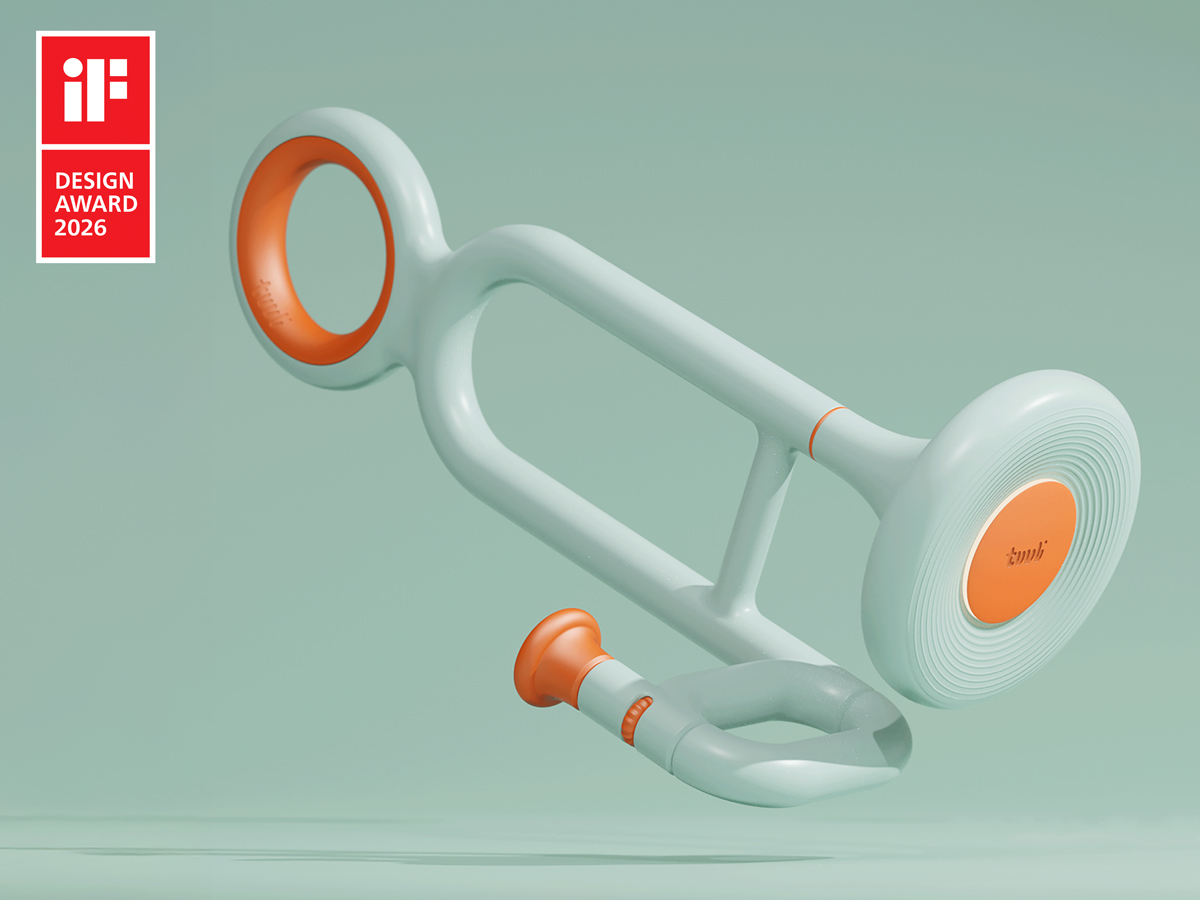
The third award-winning concept, Tuuli Electronic Trombone, explores how design can reshape the way people learn and experience music. As participation in traditional brass instruments declines among younger musicians, Tuuli introduces a more accessible and engaging alternative.
The electronic trombone features a looped feedback system that allows players to physically feel each note they produce. This tactile connection between movement and sound helps create a more intuitive and immersive learning experience.
Its modular design also allows the instrument to evolve with the musician – encouraging experimentation, creativity and personal expression. In doing so, it opens up new possibilities for how people connect with music.
Why user-centric design is key to deep tech innovation
Although these projects span healthcare, consumer products and music, they all share the same user-centric design philosophy.
Our transdisciplinary teams bring together their unique skills from the very beginning of a project. This collaboration allows us to address complex technical challenges while keeping the end user firmly in mind, with designers working hand-in-hand with engineers and technologists to turn deep technical capability into engaging human experiences.
Whether a project begins with a user challenge, an emerging technology or a novel technical capability, our teams explore potential applications, user needs and technical possibilities in parallel – identifying where they intersect to create solutions that are both technically feasible and meaningful for the people who use them.
The result is deep tech innovation that doesn’t just demonstrate technical possibility, but delivers experiences that people can understand, trust and use with ease.
This is where user-centric design becomes a powerful driver of impact and value. Products that meet the user’s needs are more likely to be adopted, used correctly and deliver better outcomes – whether that means improved healthcare participation, new creative possibilities or simply a better everyday experience.
Recognition for design with purpose
For our team, these iF Design Awards are a real moment of pride – but they’re also a reminder of why we do what we do. Breakthrough design is never just about aesthetics or technology alone, it emerges from understanding real human challenges and applying empathy, creativity and engineering to solve them.
When deep tech and human insight come together, we have an opportunity to create feasible solutions that genuinely makes a difference. That’s the mindset that defines design at CC, and it’s one that continues to shape the innovations we bring into the world.
Expert authors

Lai Chiu Tang
Lai Chiu Tang leads a design team focused on medical technology innovations at Cambridge Consultants. With over 18 years of experience in medical device development, Lai champions design and innovation to improve the user experience of products. Her expertise spans industrial design, UI, packaging and information design.